

Tumeric Latte is perfect for a cold evening, early morning or any time you need to indulge yourself. Ready in less than 10 minutes, this latte offers a smooth flavor with all the anti inflammatory benefits of tumeric.
Santa needs this! It's sure to be a treat that you too, will love
- Vegan, gluten free
- dairy free
- refined sugar free
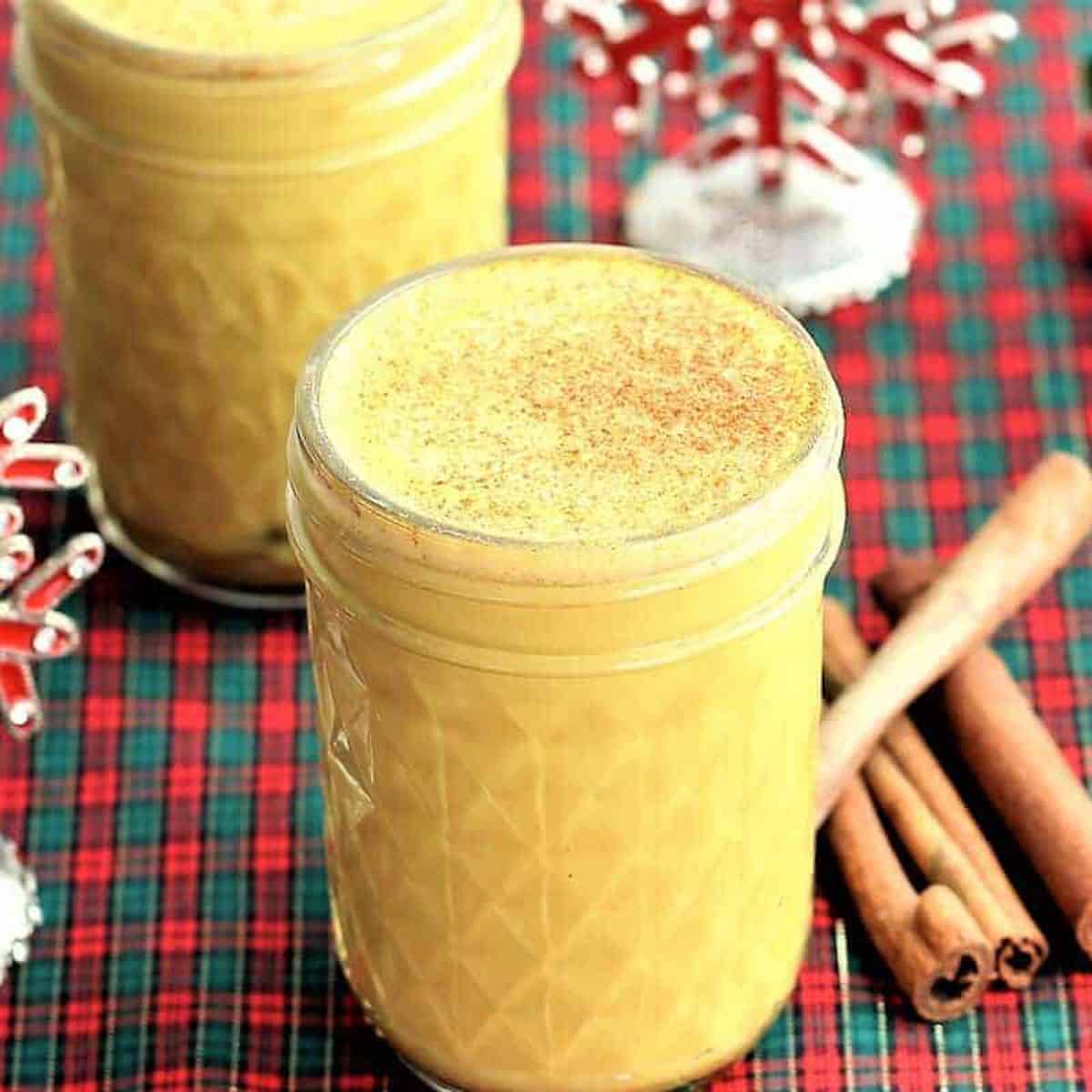
If you prefer a tea or coffee flavor, you can prepare the latte, and use it as a creamer in your tea or coffee. I found that adding an Earl Grey tea bag to my hot latte created a variation that I love.
Jump to:
Benefits
Turmeric is great because it:
- contains essential minerals like manganese and iron
- is loaded with anti-oxidants
- may help reduce inflammation thanks to ginger, cinnamon and curcumin (active ingredient in turmeric)
Variation
If you prefer caffeine with your latte, add an earl grey tea bag to each cup, and allow to steep.
Tumeric Latte
Ingredients
- 2 cups milk or dairy alternative such as soy, almond, oat
- 1 teaspoon turmeric
- ¼ teaspoon ginger
- ½ teaspoon cinnamon
- ¼ teaspoon cardmon
- 1 tablespoon maple syrup
Instructions
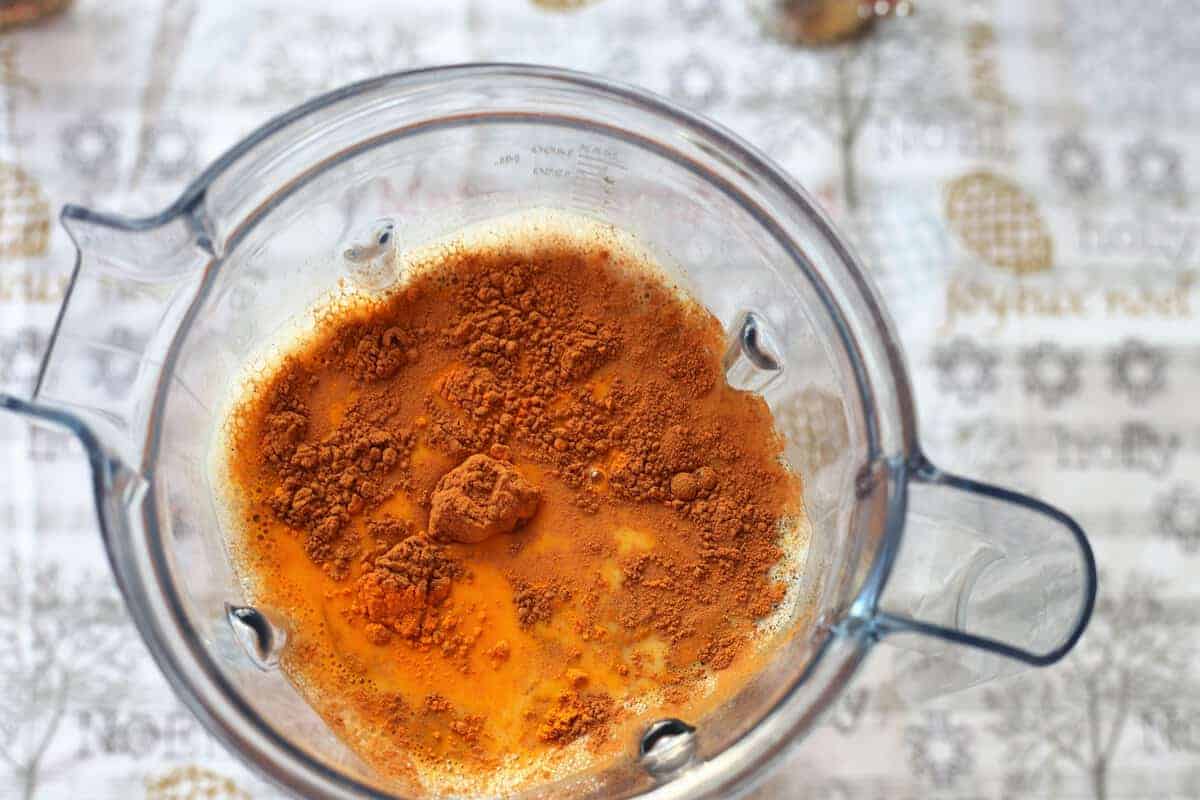
- Add all ingredients to high speed blender and blend. Pour into pot and cook over medium heat until slightly bubbling.
- Sprinkle with cinnamon.
- Serve.
Notes
Tazo Turmeric Latte
The Tazo Turmeric Latte comes premixed, and is mixed 50/50 with milk of your choice. Once mixed, it's heated over the stove or mixed with ice and enjoyed cold.
It also uses black pepper instead of cardamon as in the recipe above.
While this is convenient (and tasty!), it allows for less control over the sweetness and spice levels than if making from scratch.
Starbucks Golden Turmeric Latte
Starbucks doesn't use the Tazo turmeric latte mix, but instead makes it with the original ingredients.
The ingredients are similar to our recipe, but again uses black pepper instead of cardamon and honey instead of maple syrup.
Starbucks Tumeric Latte
Ingredients
- 1 shot espresso Starbucks single origin Colombian
- 1 cup oat milk
- 1 teaspoon vanilla essence
- 1 teaspoon turmeric
- ¼ teaspoon ginger ground
- ½ teaspoon cinnamon
- 1 dash black pepper
- honey to taste
Instructions
- Add all ingredients (except vanilla) and blend
- Pour espresso into mug and add vanilla
- Pour milk into espresso
Buy Gourmet Coffee Beans
- ✔️ Fresh roasted to order
- ✔️ 100% high qualtiy Arabica coffee
- ✔️ Custom grind (or whole bean)
- ✔️ 1-way valve, laminate bag (for freshness)
- ✔️ Bulk discounts



Leave a Reply